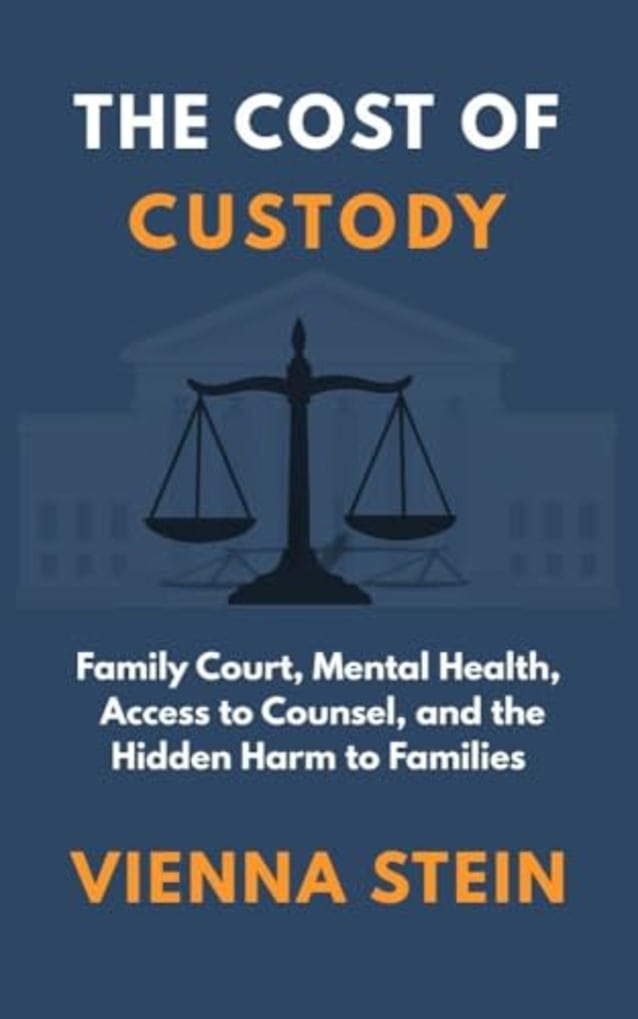
The Cost of Custody: Family Court, Mental Health, Access to Counsel, and the Hidden Harm to Families
About
The Cost of Custody isn’t just about divorce—it’s about what happens when a legal process becomes a long-term threat to the body, the mind, and a child’s sense of safety.
When custody enters the courtroom, families often learn a brutal truth: outcomes can depend less on what’s right and more on who can afford representation, navigate complex procedures, and survive months (or years) of delays, evaluations, and paywalled “required” services. For parents without counsel, the system can feel like a maze where one mistake costs stability—missed work, mounting bills, and a nervous system stuck in survival mode. And for children, the fallout can echo far beyond the final order.
Through the composite story of Julie, a working parent forced to miss paychecks just to attend court—The Cost of Custody exposes the hidden harm of modern family court: the financial collapse, the emotional toll, the misreading of trauma as “instability,” and the coping behaviors that rise when the body tries to control what it can. This is not a legal textbook. It is a research-informed, plain-language wake-up call designed to be read by parents and professionals alike.
Inside, you’ll find:
The invisible ways custody litigation impacts mental health and the body
How “temporary” orders and delays can become a child’s permanent reality
Why vague orders and pay-to-comply services fuel repeat conflict
How power imbalance and coercive control can be misclassified as “high conflict”
A reform blueprint with measurable changes that protect child stability
Practical tools, scripts, and templates to reduce harm when you’re in the system
A judge-facing lens focused on clarity, feasibility, and child-burden protections
If you’ve ever wondered why family court leaves so many people financially broken, psychologically exhausted, and still unheard—this book puts words to what families live, and offers a blueprint for what we must build next.
Because children should not have to be resilient to a court system.